

Are you a property manager struggling to keep your unit churn rate low? You are not alone. Many property managers face churn rates of 30-35% on an annual basis. So, what is the biggest cause of unit churn? Owners selling their properties.
Although it’s not exactly the same as a client churn rate, when an owner decides to sell their rental property, it can be a hard financial loss for the property manager who has the home under their care.
But what if we told you there was a way to reduce the likelihood of unit churn when one of your clients decides to sell a property?
How Can I Avoid Losing Clients Who Want to Sell Their Properties?
The first step in reducing owner and unit churn for your property management company is identifying a client’s intent to sell or leave. Then, we can work to find a solution.
If a client intends to leave your property management company, the best thing you can do to minimize the damage is to find out what you can do to prevent the same loss from happening in the future.
Whether this means lowering your costs, improving your customer service, or re-evaluating who your ideal client is, it is important that you learn from your losses to lower your risk of repeating them.

However, if the intent is to sell, you can turn the situation around and reduce your company’s unit churn by offering to sell the property for them.
You can then sell that property to one of your other clients who may be looking for new real estate investment opportunities.
This way, the property gets sold, and you can keep the units under your management. Plus, you can earn a brokerage commission from the sale of the property. So, not only do you avoid losing money to unit churn, but you can even make money from this approach!
In this blog post, we will teach you how to prevent unit churn and grow your business by pulling off this kind of sale. Keep reading to learn how!
How to Sell Clients’ Properties to Other Owners
So now we know that helping to sell properties from one client to another can help grow your business and reduce your unit churn rate. But how exactly can you pull this kind of sale off?
First, you will need to make sure that you have hired a managing broker for your property management company, or that you have a brokerage license. Once that is achieved, here are some ways that a professional property manager may facilitate a sale between two clients:
1. Do a Market Analysis and Price the Property
As a professional property manager, you are most likely an expert in all things real estate. This means that you can help your clients navigate selling their rental property.

Start by conducting a thorough and comprehensive market analysis to determine the current value of the property. Look at similar properties for sale in the area and find out what their going rate is. Then, you will be able to accurately advise your client, helping them competitively price their property and attract potential buyers.
2. Make Any Necessary Property Improvements
After you have determined what the best market price for the property should be, you can find more ways to boost the home’s desirability and give it the competitive edge that it needs to attract buyers. This can be done with improvements or repairs.
Use your real estate expertise to advise your clients on what the best improvements to the home will be. This will ultimately depend on the individual property and what it needs. For example, you may think that adding another bathroom will boost the market value of the property, or painting the walls a neutral color will attract potential buyers at a faster rate.
If there is a specific upgrade or repair that you believe will help sell the property faster or at a higher profit, coordinate with contractors that you trust to oversee the renovations and ensure that the property will be more attractive to buyers after they are done.
3. Advertise the Property
Once the property is ready to be placed on the market, you will want to use your expertise to develop a marketing strategy. This will help you reach potential buyers at a faster rate.

We recommend making use of both modern and traditional marketing strategies. Utilize both the online and offline channels accessible to you to help you promote the property. Take professional photos of the home, stage it, make virtual tours, and take the time to create a solid property listing that makes the home look as good as possible.
In the description, try to really highlight the property’s best features. This can be anything from the location to the layout of the home. Your goal is to emphasize what makes this property attractive so that new buyers can see what the home has to offer.
Finally, you will want to leverage any social media platforms and online real estate portals that you have access to. This will help you spread the word about the property and gain new eyes on the listing.
4. Reach Out to Your Network
As a property manager, a major component of the job is networking. Depending on how long you have been in the industry, you likely have a wide pool of contacts that you have gathered over the years, ranging from contractors to investors.
When you are helping a client sell their property, we recommend tapping into this network of industry professionals to identify potential buyers.
If you need help expanding your network in the industry, there are many real estate events and networking functions that take place all around the country. Find some events in your area and use them to meet other real estate professionals.

5. Make Communication a Priority
Throughout this process, you must make communication with owners a top priority. Be sure to keep them updated on everything related to the property, including market trends, potential buyers, and how the sales process is progressing.
Your goal in this process is to act as a liaison between the owners and the potential buyers. Make sure to be readily available to answer any questions or concerns that either party may have about the property and its sale. Answer both the owner and potential buyers as promptly as possible to ensure that no one feels like they are in the dark about the process.
6. Host In-Person Showings and Open Houses
In the process of trying to find new potential buyers, you will have an easier time generating interest in the property if you take the time to coordinate in-person showings for the property and open houses.
This allows prospective buyers to experience what the property has to offer in real life, as opposed to simply looking at photos on an online listing. When hosting an open house or an in-person property showing, you will want to take the opportunity to sell the house’s features.
Provide detailed information about what makes the property unique, and why it can be a great investment for any prospective buyer. This is your chance to generate in-person interest and help the prospective buyer see the property’s value.

7. Help Your Client Negotiate
After you have properly advertised the home, made the necessary upgrades and repairs, contacted people in your network, and hosted open houses or showings, you will most likely have a pool of interested buyers who are looking to make an offer on the property.
In this part of the process, you can help your client negotiate and make sure they can sell the property without being lowballed or taken advantage of. Help them make counter offers and provide guidance on navigating the negotiation aspect of selling the property.
8. Provide Legal and Documentation Guidance
Once you have found a prospective buyer for the property, it is important to make sure that you are working closely with licensed real estate attorneys who can help oversee the process and ensure that all legal requirements are being met. This is crucial to close the sale properly and ensure that everything happens seamlessly.
At this point, you can help to facilitate the preparation and signing of any documents that are needed to close the sale. This includes paperwork such as contracts and disclosure forms that your client must sign.
9. Use Blanket’s Platform
Now, you may be reading this blog post and thinking, “This sounds like a lot of work!” The truth is, the process of helping your client sell a property can be long and tedious, especially if you have your regular day-to-day operations to consider as well.
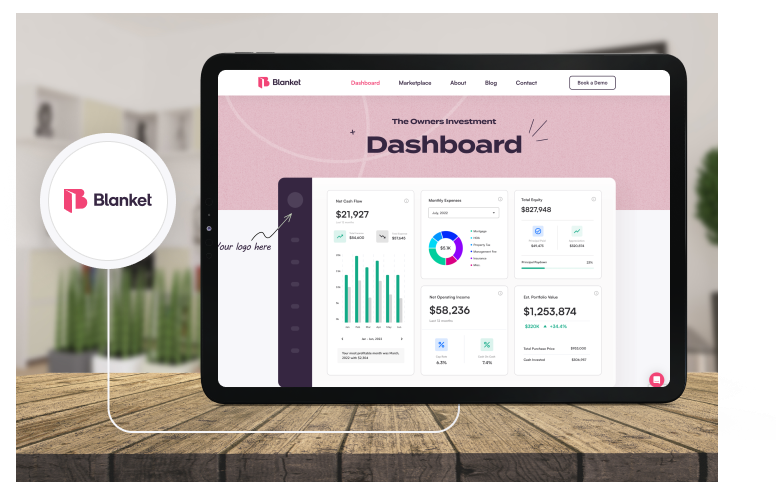
Being a property manager is hard work, especially when you are taking on a task as large as helping a client sell a property. So, if you would rather have someone else do all of this work for you, we have good news, because Blanket can!
Blanket has a wide range of features that can help property managers automate their operations. This includes the marketplace feature that allows users to create an owner marketplace directly on your property management company’s website.
Bottom Line
As a property manager, you want to do everything you can to reduce unit churn and grow your business. One way to do that is to help your clients sell their properties to other investors that you work with so that the property can remain on your company’s roster and you can get a commission.
To pull this off, however, there are many steps to be taken. From renovations to hosting showings, there is a lot that you will have to take care of if you want a property to sell for a good price.
If this process seems overwhelming, there are ways to automate it with Blanket. If you have any questions on how you can use Blanket to make your job as a property manager easier, reach out to our team for more information.