

Like always, with a new year comes a new tax season. If you’re already starting to stress about tax season, we get it! But we’re here to tell you that there are many ways in which you can minimize your stress and make your tax filing process significantly easier.
In this article, we’ll go over our eight steps for a simpler and more beneficial approach to filing your taxes as a property manager. From taking advantage of tax deductions and credits to knowing all of the crucial due dates for filing to understanding what to do should a natural disaster occur, we will cover it all.
So, if you’re ready, it’s time to dive into how exactly you can prepare to do your taxes as a property manager in 2024.
8 Ways to Make Filing Your Taxes Easier
1. Tax Deductions
Did you know that as a property manager, there’s a long list of tax deductions that are available to you? Your new and improved tax filing process must start with one critical step: good bookkeeping.
Throughout the year, property managers can preemptively make their tax season simpler by taking the time to keep a detailed and organized file of their expenses and transactions related to their business.

Many property managers fail to do this, as taking the time to have a good bookkeeping system can be a headache, and can take away from other work that needs to get done. One way to make this process easier throughout the year is to use property management accounting software to help automate the process.
Regardless of the method you choose, make sure that you make a habit of calculating all of your taxable income accurately and claiming your eligible deductible expenses. Some of the most commonly claimed deductibles include advertising, cleaning/maintenance of the rental property, employee wages, and pest control.
2. Tax Credits
Property managers in the United States have several tax credits that are available for them to claim if they are eligible. But what exactly is the difference between a tax deduction and a credit?
A tax credit will directly reduce the dollar amount of taxes that you owe. A deduction, however, reduces how much of your income is taxable. So, if you have $1,000 in tax credits, that means the amount you owe will be $1,000 lower than it originally was.

Here are some examples of common tax credits that many property managers will claim:
- Clean Vehicle credit: This is for taxpayers who buy a fully electric or hybrid vehicle and is a credit of up to $7,500.
- Energy Efficient Home Improvement credit: Taxpayers who make energy-efficient improvements to their home such as insulation, electric panel upgrades, or skylights can receive up to 30% in tax credits. There is also a tax credit available for businesses that make similar improvements to their office spaces.
- The Small Business Health Care Tax Credit: Small businesses that provide their employees with healthcare benefits are eligible for this tax credit.
- The Work Opportunity Tax Credit: Small businesses that hire employees in certain disadvantaged groups may be eligible for this tax credit.
3. Tax Returns for Property Managers
Property managers can file for tax returns by filling out the necessary tax forms and submitting them come tax season. The specific forms that you will need to fill out are dependent on the way your business is structured, how much income you can make in a year, and your yearly expenses.
Here are three different kinds of businesses and how they will each file their tax returns:
- Sole proprietorship or single-member limited liability company (LLC): If you are a property manager that is registered as a single-member limited liability, you will be considered a sole proprietor and you must file a profit or loss statement along with your tax return and the rest of your paperwork.
- LLC and partnership: If your property management company has two or more owners, you will be taxed the same way as a partnership. Unlike a sole proprietorship, a partnership business will file its own tax return on the IRS forms.
- S corporations: An S corporation is taxed similarly to a partnership, where incomes and losses are passed through the owner’s personal tax rates and returns. However, S corporations must also file Form 1120S and provide a Schedule K-1. Additionally, shareholders file Schedule E with their personal returns.
- C corporations: These businesses are filed completely separate from the business owner’s personal taxes.
4. The 1031 Tax Exchange
If you own rental properties, you may know about the 1031 tax exchange. This is something that you can use to your advantage to help you defer some of your taxes, increase your cash flow, and boost your return on your investments.
The 1031 tax exchange is a tax deferment technique where you immediately reinvest the money that you receive from the sale of a business or rental property into another, like-kind investment.

There are many rules that surround the 1031 tax exchange, so you will need do your research and plan accordingly. First, to take advantage of the 1031 tax exchange, the funds from your first sale must be held by a 3rd party in escrow.
You also need to make sure that the property you’re buying in its place is recognized as a like-kind property by the IRS. Keep in mind that certain properties may not be eligible for the 1031 tax exchange, such as certain vacation homes.
After you have sold the original property, a like-kind replacement property must be chosen within 45 days of the original sale, and the replacement must be purchased within 180 days.
The new replacement property must be equal to or more valuable than the original property that was sold, and 100% of the funds that were made from the sale of the first property must go into purchasing the new one. As long as all of the rules are followed, a 1031 exchange can be helpful to any rental property owner come tax season.
5. Forms 1099-MISC and 1099-NEC
If you are the owner of a property management company, or any business for that matter, you will have to fill out the tax forms 1099-MISC and 1099-NEC, as they are both used to report your income to the IRS.
Form 1099-MISC is used by businesses to report miscellaneous income. This includes freelance income, rent, or any other compensation that isn’t a typical employee salary.
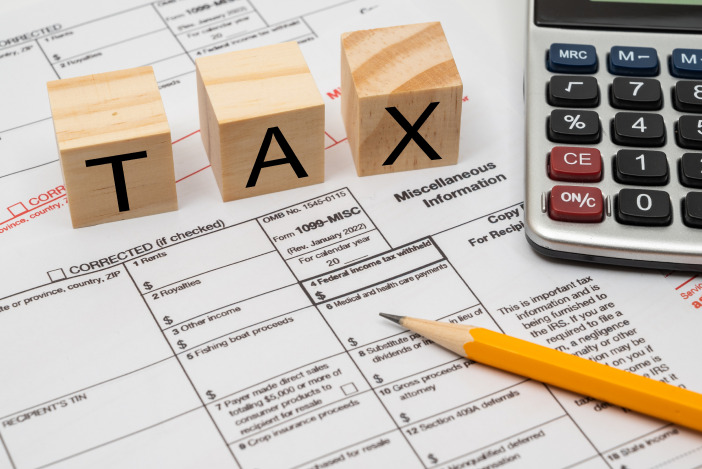
Independent contractors who have made more than $600 in income must use form 1099-NEC to report it come tax season. This does not include non-business-related services, payment to corporations, merchandise, phone bills, storage, freight, or other similar items that are not required to be reported.
Any 1099-NEC forms must be properly filed by the IRS by February 1st, 2024, and 1099-MISC forms must be filed by March 1st, 2024.
6. Important Dates for Filing Your Taxes
One thing that any property manager who is looking to make tax season easier should do is organize and file your tax documents early. This will help to ensure that you always have an adequate amount of time to gather all of your documents and information that you will need to accurately file your taxes.
The more proactive you are with your taxes, the more you will be able to prevent mistakes and errors along the way, not to mention potential headaches with the IRS!

So get out your calendars, because listed below are the more important dates for property managers looking to get all of their taxes done on time:
- January 31st: All 2023 Forms 1099-MISC and 1099-NEC must be provided to any independent contractors that your company works with or any rental property owner recipients.
- February 1st: All 1099-NEC forms must be filed with the IRS.
- March 1st: Any paper 1099-MISC forms must be filed with the IRS.
- March 15th: All partnership tax returns are due, and the S corporation tax return is due as well.
- April 1st: Electronic 1099-MISC forms must be filed with the IRS.
- April 15th: C corporation taxes and individual tax returns are due.
- April 20th: Individual taxes are due in the state of Hawaii.
- May 1st: Individual tax returns are due in the states of Delaware, Iowa, and Virginia.
- May 15th: Individual tax returns are due in Louisiana.
- June 17th: Your second IRS estimated tax payment for 2024 is due.
- September 16th: Your third IRS estimated tax payment for 2024 is due.
Now, you must also keep in mind that every state is different when it comes to taxes. As a property manager, you are responsible for filing taxes for the properties you manage in different states, and the tax laws will vary from property to property depending on where they are located.
For example, some states may charge you a 3% income tax, while others can go up to 12%.

7. The Inflation Reduction Act
In August of 2022, the Inflation Reduction Act was signed as a way to help stimulate the economy and address climate change. This law includes a variety of tax incentives, grants, and rebates that property managers can take advantage of this tax season. These incentives include:
- Tax breaks for those who purchase electric vehicles and invest in alternative energy refueling systems. These tax breaks can go up to $1,000.
- Up to $14,000 in rebates for those who purchase heat pumps and energy-efficient appliances.
- Those who install solar panels may be eligible for over $9,000 in savings and a 30% tax credit.
We recommend that property managers be more aware of these incentives (and sustainable practices in general!) and take the time to work with your clients to see what you can do to qualify for them.
8. Disasters
While there may be measures that you can take to predict and prepare for them, no rental property owner can be fully immune to the threat of natural disasters.
Generally, if your rental property is in any way affected by a natural disaster, you may qualify for certain tax relief benefits such as deductions for losses on your property and credit to help you rebuild and repair the damage.
When a natural disaster strikes, the last thing anyone wants to consider is deadlines. So, if you do find yourself in this unfortunate situation, you will automatically be granted an extension from the IRS.
But what about the cost of damages? While insurance can be a saving grace in a situation such as this, you never really know how much of the repairs will be covered by your policy.
Depending on your insurance plan, you may still be liable for repairing, rebuilding, or even replacing the rental property. Luckily, any uninsured losses are deductible for your taxes.
If you are at a loss regarding how you can calculate the tax deductions for your property management company when disaster strikes, luckily, there is a simple formula that you can follow to make it easier:
Adjusted basis – salvage value – insurance proceeds = deductible loss.
It is important to note that in this formula, every casualty loss has to be calculated separately as its own line item. Getting an appraisal done will help you determine the reduction of fair market value and the salvage value of your damaged property.
Bottom Line
As it comes time for you to file your taxes for your property management company, it is important to know how to prepare your documents and information in a way that makes the entire process run smoothly.
If you have any further questions about how to make your tax filing easier, or if you have any other real estate-related needs, contact our team at Blanket for our expertise.